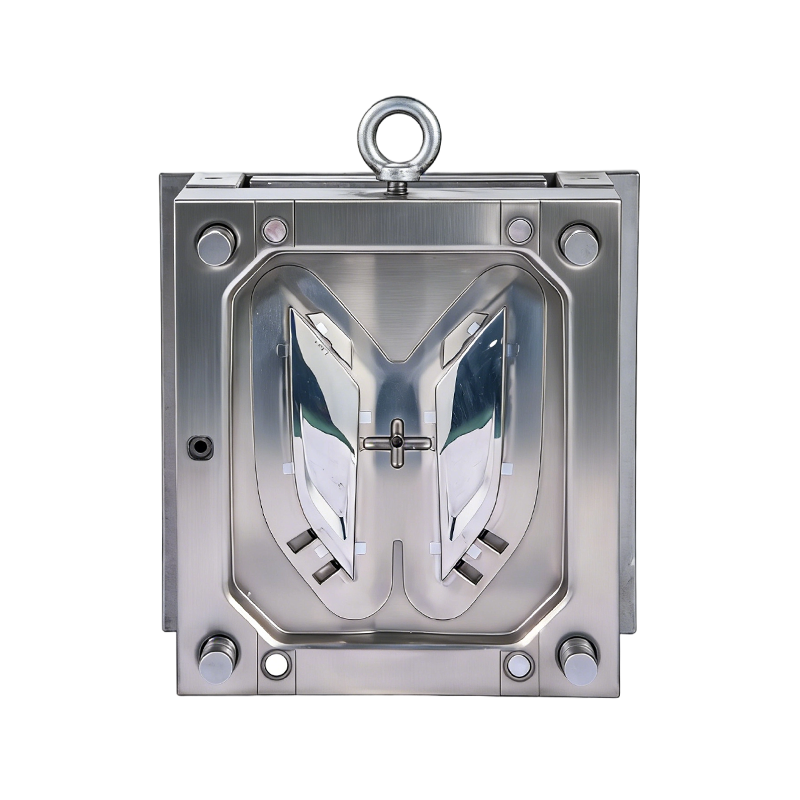
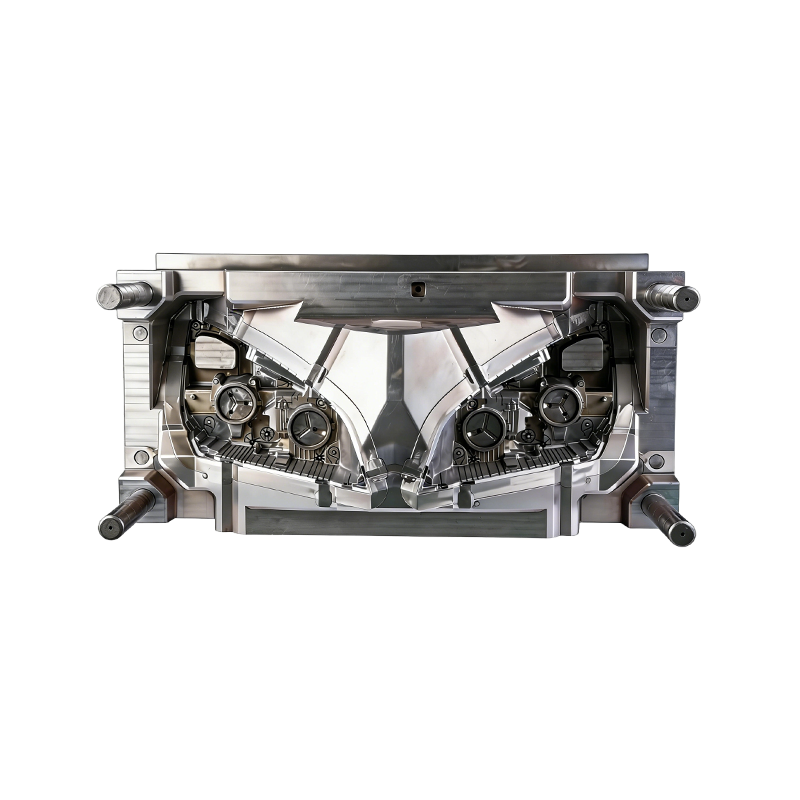
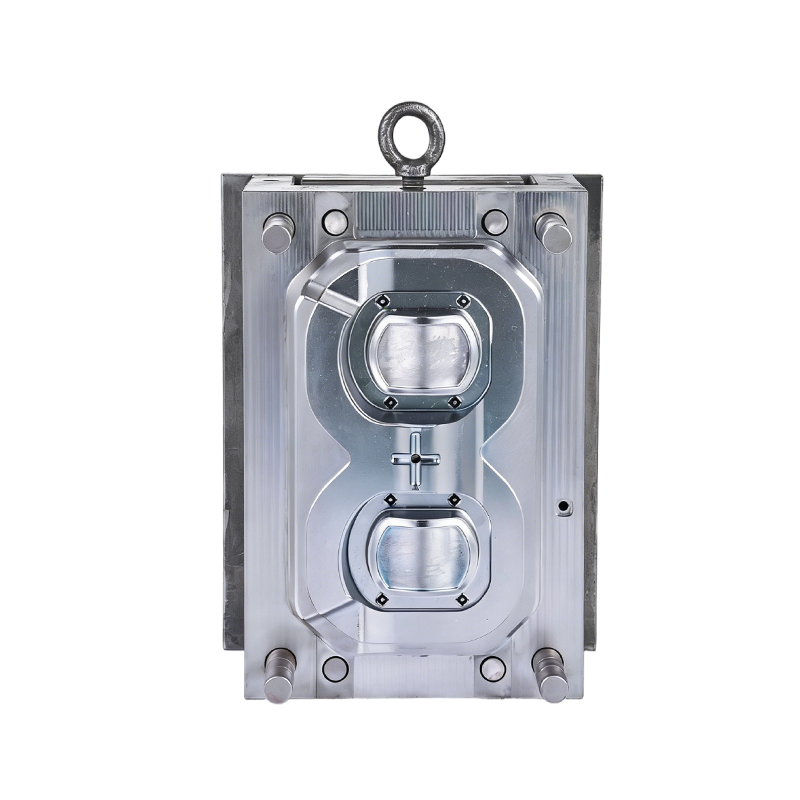
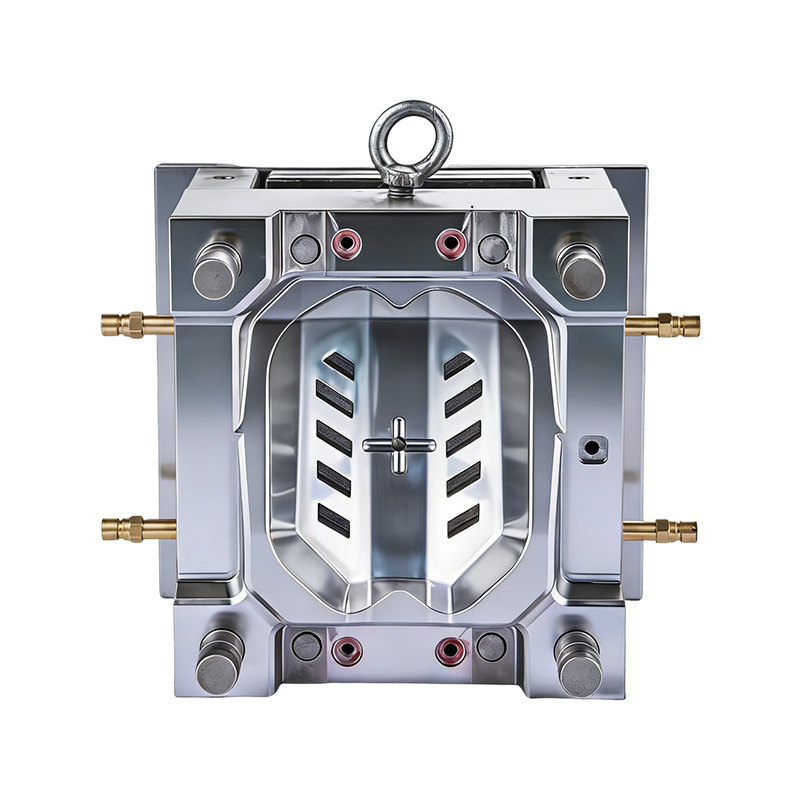
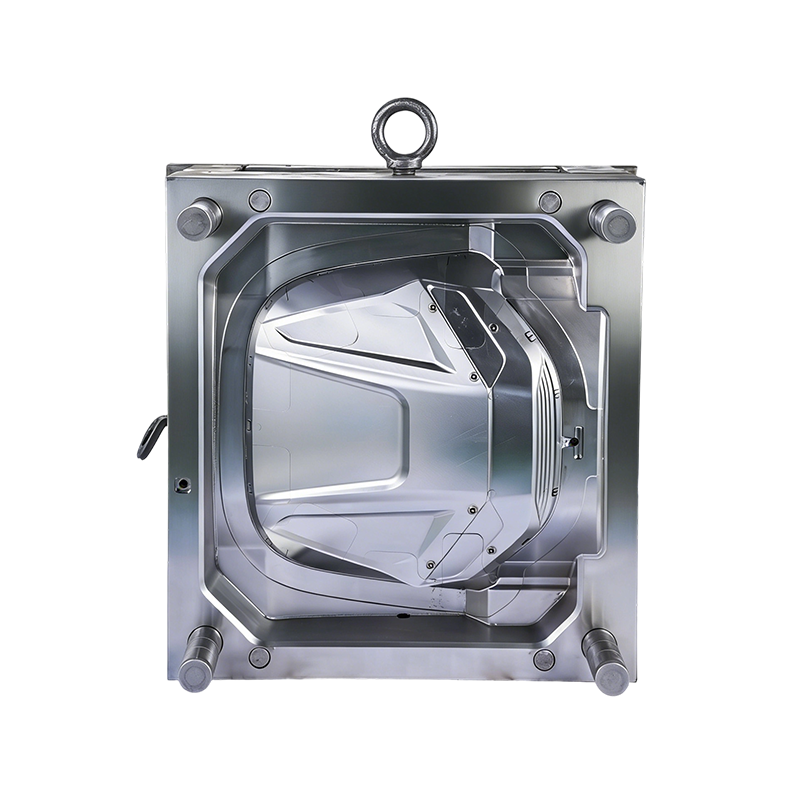
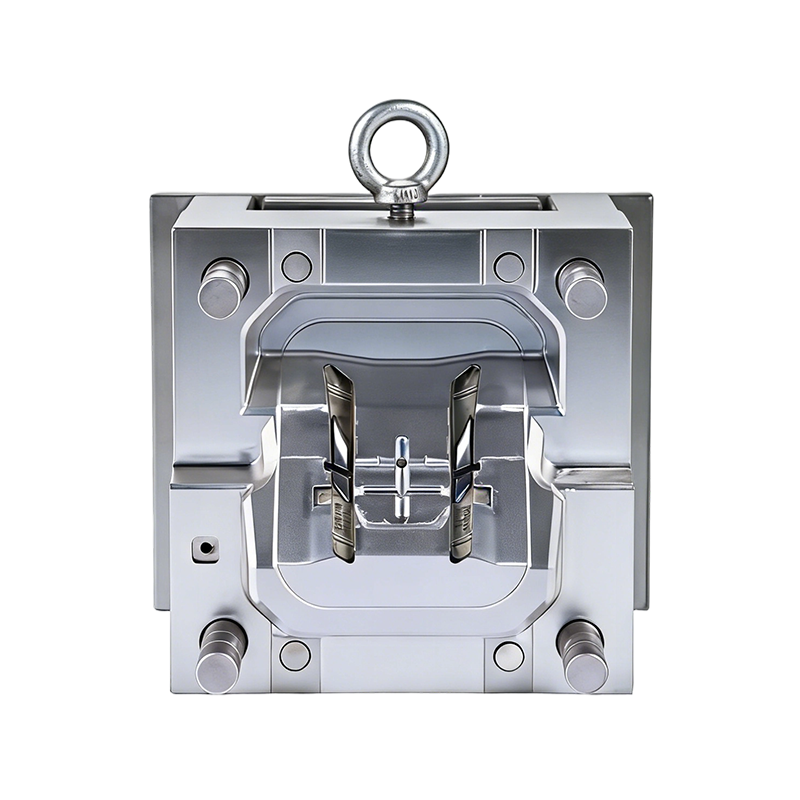
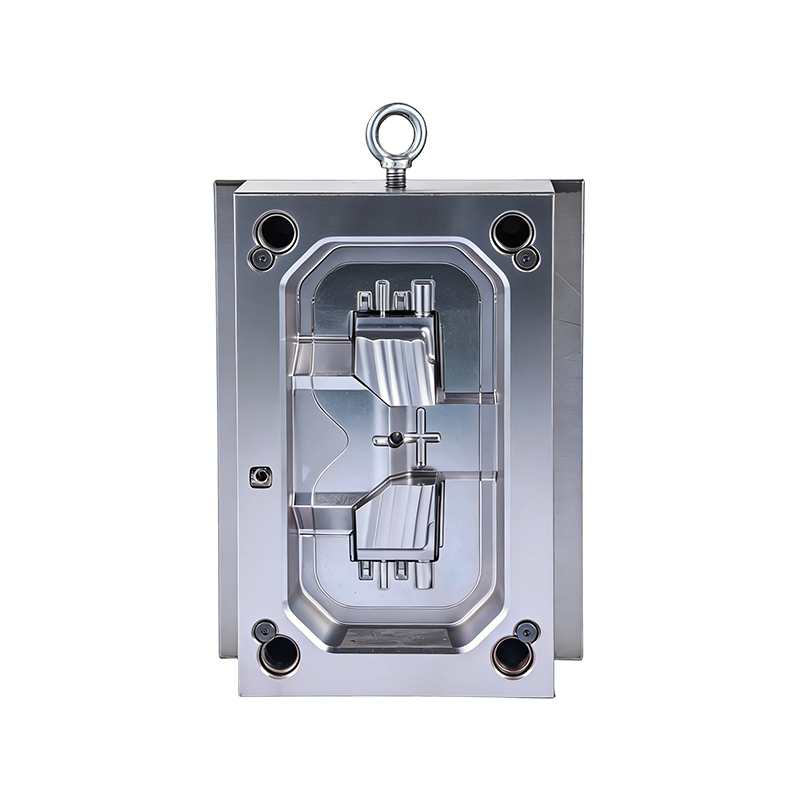
What Is the Impact of Material Selection on the Mold Design for a Fog Lamp Assembly Mold?
Defining the connection between resin and steel
Fog lamps sit low on the vehicle, exposed to water, road salt, vibration, and heat from the bulb. The material you choose for the lens, reflector, and housing each forces a different set of design decisions long before the first chip flies.
How polycarbonate changes cooling layouts
The lens is almost always polycarbonate. PC flows beautifully but releases heat slowly. That slow cooling means the mold needs water channels placed closer together—typically on 25-millimeter centers instead of the usual 40 millimeters. Miss that spacing, and the lens takes too long to freeze off. The result is warped optical surfaces that scatter light instead of projecting a clean beam. Some shops add baffles or bubblers inside core pins to pull heat from the center of the lens area.
How PBT affects gate placement
For the reflector housing, many European specifications call for PBT. It takes vacuum metalization well and holds its shape under heat. But PBT is semi-crystalline, which means it shrinks directionally. This anisotropy creates a trap for the unwary. A single gate placed at the center of the cavity produces a round part. Two gates on opposite sides produce an oval part because the material shrinks more across the flow direction than along it. For a fog lamp reflector where the bulb seats into a round hole, oval is a reject. The mold design must commit to a single center gate, which usually means a hot runner drop straight through the core.
What Are the Surface Treatment and Optical Requirements for a Car Part Mold?
Defining what "smooth enough" actually means
Walk into any automotive quality lab, and you will find a set of plastic plaques labeled SPI-A1, SPI-B2, SPI-C3. These are not random codes. They are the universal language for surface treatment and optical requirements for a Car Part Mold. A mold that produces a fog lamp reflector needs a mirror finish. A mold for a dashboard trim panel might need a fine matte texture to hide fingerprints. Getting the surface treatment wrong means parts that look hazy, feel rough, or fail optical testing.
How surface treatments affect part performance
The table below breaks down the most common surface treatments, where they apply, and what happens when specifications are missed.
|
Surface Treatment
|
SPI Grade / Standard
|
Typical Automotive Application
|
Failure Mode If Requirements Are Missed
|
|
Diamond polish (mirror)
|
SPI-A1 (no visible scratches at 20x magnification)
|
Fog lamp reflectors, headlamp lenses, instrument cluster covers
|
Hazy reflection, scattered light beam, failed DOT or ECE certification
|
|
Grit stone polish
|
SPI-B1 (600-grit stone)
|
Interior trim panels, door handles, pillar covers
|
Visible tool marks that catch lint during cleaning or show through paint
|
|
Dry blast (matte)
|
SPI-D2 (fine glass bead)
|
Anti-glare surfaces around screens, steering wheel controls
|
Inconsistent gloss across cavities, leading to customer rejection
|
|
Textured (VDI 3400)
|
VDI 12 to VDI 45 (sandblasted or chemically etched)
|
Dashboard skins, glove box doors, air vent louvers
|
Glossy spots where texture depth varies, causing uneven light diffusion
|
|
Hard chrome plating
|
No SPI grade — measured by coating thickness (5–15 microns)
|
Ejector pins, slide faces, wear-prone cavity surfaces
|
Galling or scoring after 100,000 cycles, requiring mold tear-down
|
Optical requirements beyond surface finish
Surface finish alone does not guarantee optical performance. Three additional requirements apply specifically to transparent or reflective car parts.
First, reflectivity retention. A fog lamp reflector mold must produce parts that maintain at least 85 percent specular reflectivity after 500 hours of thermal cycling at 120 degrees Celsius. This is measured with a goniophotometer. A diamond polish is necessary but not sufficient. The underlying steel must also be free of non-metallic inclusions, which is why many specifications call for ESR-grade (electroslag remelted) steel like Stavax or M340.
Second, lens clarity. A headlamp or fog lamp lens mold must produce parts with less than 2 percent haze and 92 percent total light transmission. Haze comes from surface roughness at the microscopic level. Even an SPI-A1 polish can develop micro-roughness if the mold steel is too soft or if the polish was done in the wrong direction.
Third, texture depth consistency for non-optical but appearance-critical parts. A VDI 30 texture on a dashboard panel should measure 10 to 12 microns deep across every square centimeter of the cavity. Variations of more than 2 microns produce visible gloss differences that assembly plants reject at incoming inspection.
What Is the Typical Service Life of a Mold Used in OEM Injection Molding Manufacturing?
Defining life in shots, not years
Ask an OEM purchasing manager what is the typical service life of a mold used in OEM Injection Molding manufacturing, and they will not give you an answer in years. They will give you a number of shots. A mold that cycles once every 30 seconds will run about one million shots per year of two-shift operation. A mold that cycles once every 60 seconds will run about 500,000 shots per year. Life expectancy depends entirely on material, maintenance, and steel quality.
The three tiers of mold life
Low-volume tooling for prototype or pre-production runs typically uses P20 or 718 steel. These molds last 100,000 to 250,000 shots. They are adequate for pilot runs but not for mass production. The limitation is wear resistance and heat checking. P20 is not through-hardened, so the cavity surfaces soften over time under the heat and pressure of repeated cycles.
Production tooling for most interior and exterior trim parts uses H13 or H11 hardened to 48–52 HRC. These molds reliably deliver 500,000 to 1.5 million shots with proper maintenance. A well-built H13 mold running unfilled polypropylene can exceed two million shots. The same mold running glass-filled nylon might need cavity polishing every 300,000 shots and replacement gate inserts every 600,000 shots.
High-volume tooling for powertrain components or under-hood parts uses premium steels like CPM 10V, Vanadis 4 Extra, or D2. These molds routinely exceed three million shots. One documented case involves a 16-cavity mold for a fuel system component made from CPM 10V. It ran 4.2 million shots over six years. The only service was replacing ejector pins at 2 million shots and cleaning cooling lines annually.
What kills molds before their time
Three factors consistently shorten service life in OEM environments. First, corrosion. Materials like PVC, POM, and some grades of PC release acidic byproducts that pit unprotected cavity steel. Stainless or nickel-plated cavities are the fix, adding 20 to 30 percent to tooling cost but doubling or tripling life.
Second, thermal fatigue. Heat checking appears as a network of fine cracks on cavity surfaces exposed to rapid temperature cycling. H13 resists heat checking better than P20, but even H13 will crack after one million shots if cooling channels are poorly placed. Conformal cooling cuts thermal fatigue by keeping cavity temperatures more uniform.
Third, abrasive fillers. Glass fibers, mineral fillers, and carbon fiber all act like sandpaper against cavity steel. For materials with more than 20 percent filler content, standard H13 might last only 200,000 shots. Powder metallurgy steels like CPM 10V last three to five times longer but cost twice as much and require EDM for most cavity features.


 English
  عربى
عربى